Let people see it before it is built.
I make 3D people can use: rooms they can walk around in, products they can put together themselves, and images that look like photographs of something that does not exist yet. The whole chain, from model and light to a scene that runs smoothly on a phone.
- Real time
- Three.js in the browser, also on mobile
- Images
- Photorealistic images and film from Blender
- Games
- Unity, Unreal Engine 5 and UEFN
- From
- A drawing, a photo, a phone scan or an idea
01 · The range
Six things I make.
3D in the browser
Showrooms, products and small worlds that open from a link. Nothing to download.
Photorealistic images and film
Buildings, rooms and products shown finished before they exist, for sales, applications and presentations.
Configurators and planners
3D where customers put the solution together themselves, and can only choose what can actually be built.
Scan to 3D
A scan with the phone becomes a measured model of the room or the home.
AI images of real rooms
An ordinary photo of the room, with a new kitchen, floor or colour painted in.
Games and game worlds
From small browser games to larger worlds in a game engine.
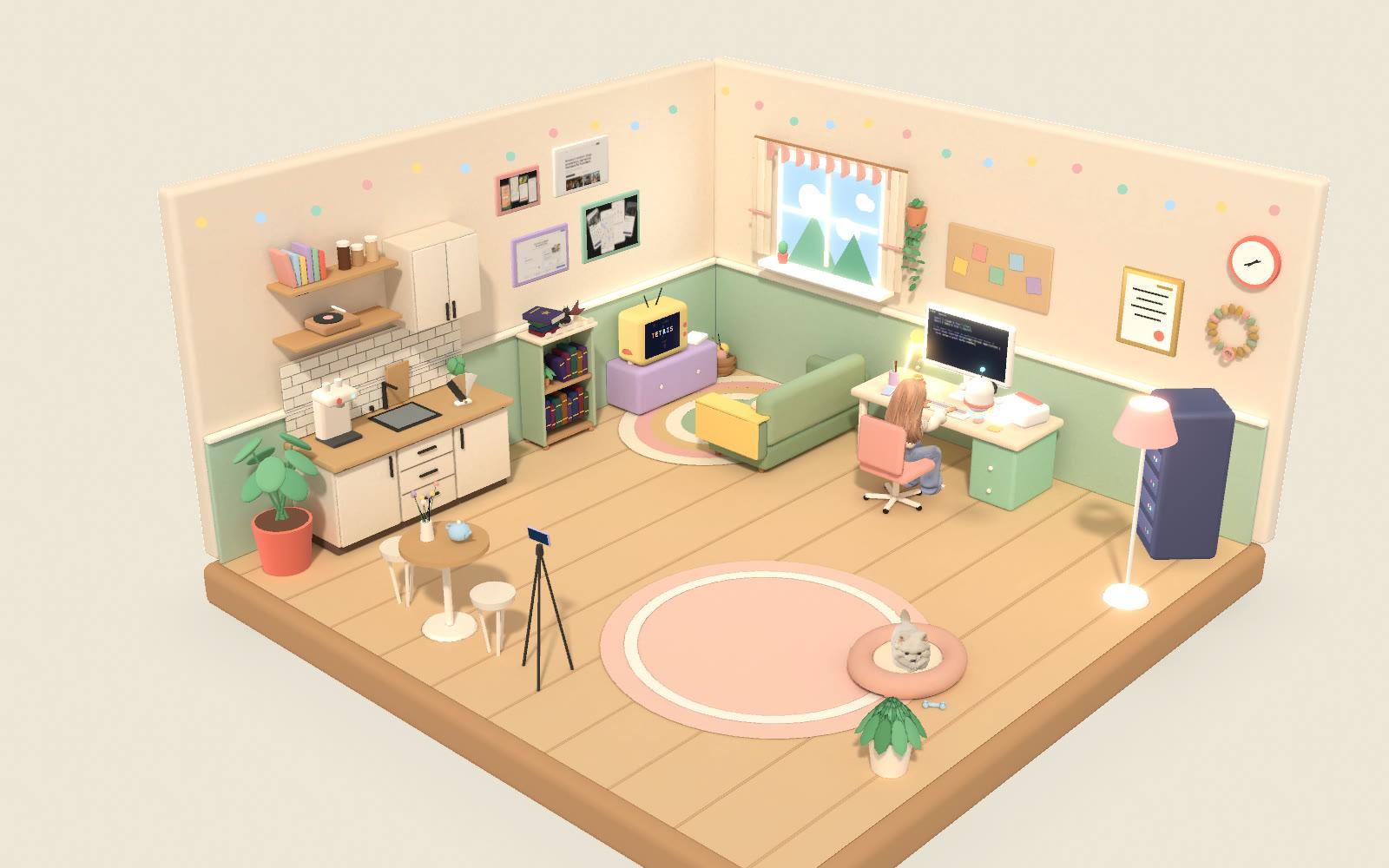
02 · Fig. 1 · Real time in the browser
The office on the front page.
A whole room in real-time 3D, with a character who fetches things, a dog, a robot and Tetris on the TV. You can turn the room, zoom and click on everything.
The light is calculated in Blender and stored as four layers: day, night, desk lamp and floor lamp. The browser blends the layers, so the room can go from day to night without recalculating a single shadow.
The character was made from a drawing, reduced to a model a phone can handle, and rigged so she can walk, sit and wave.
03 · Fig. 2 · Photorealistic
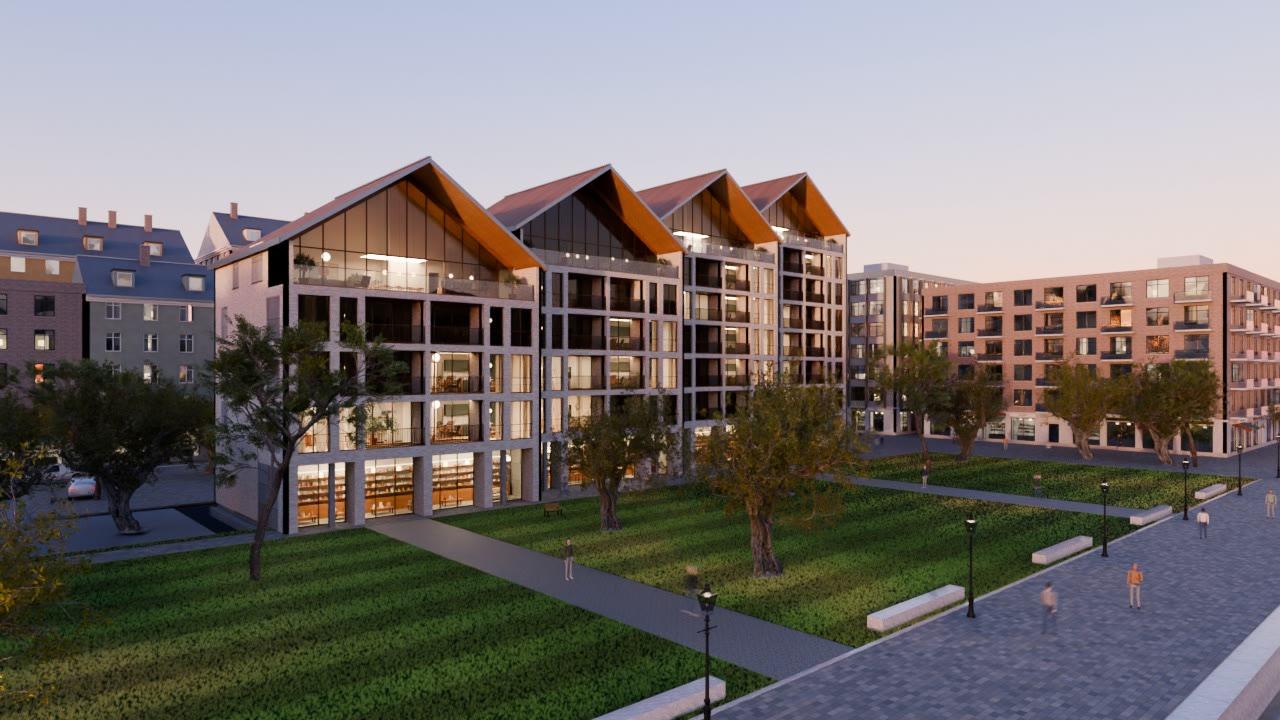
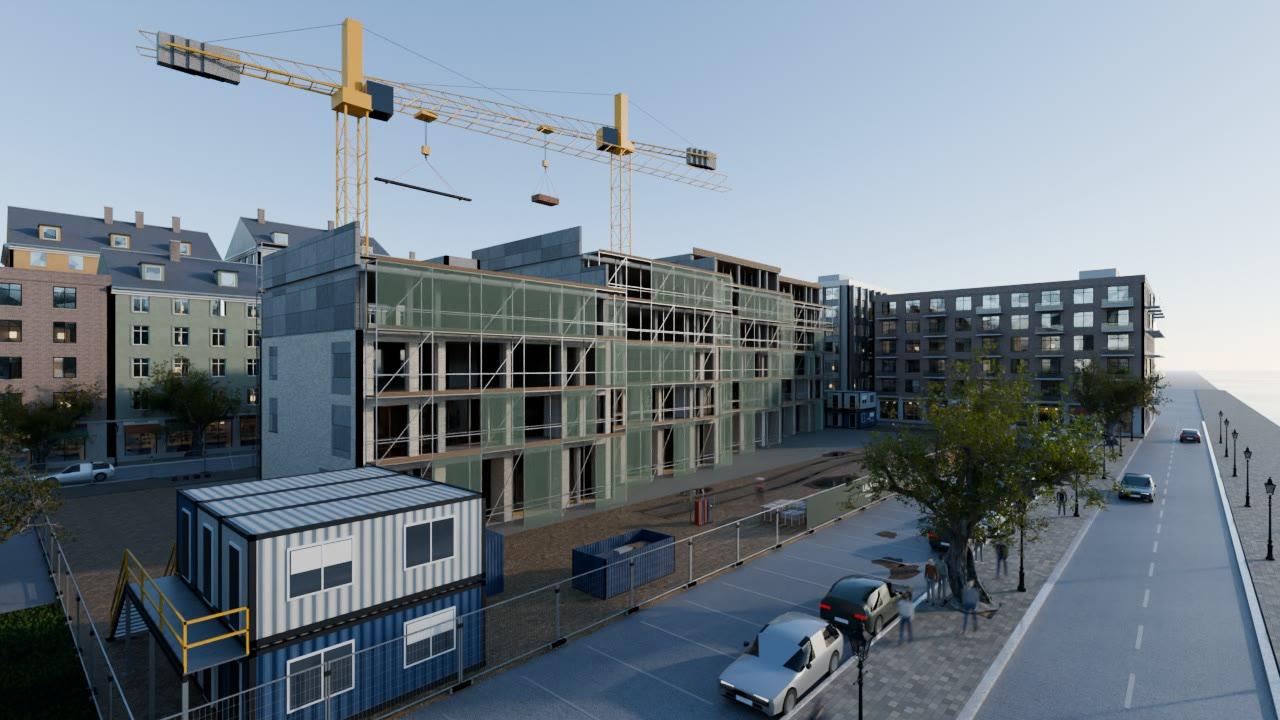
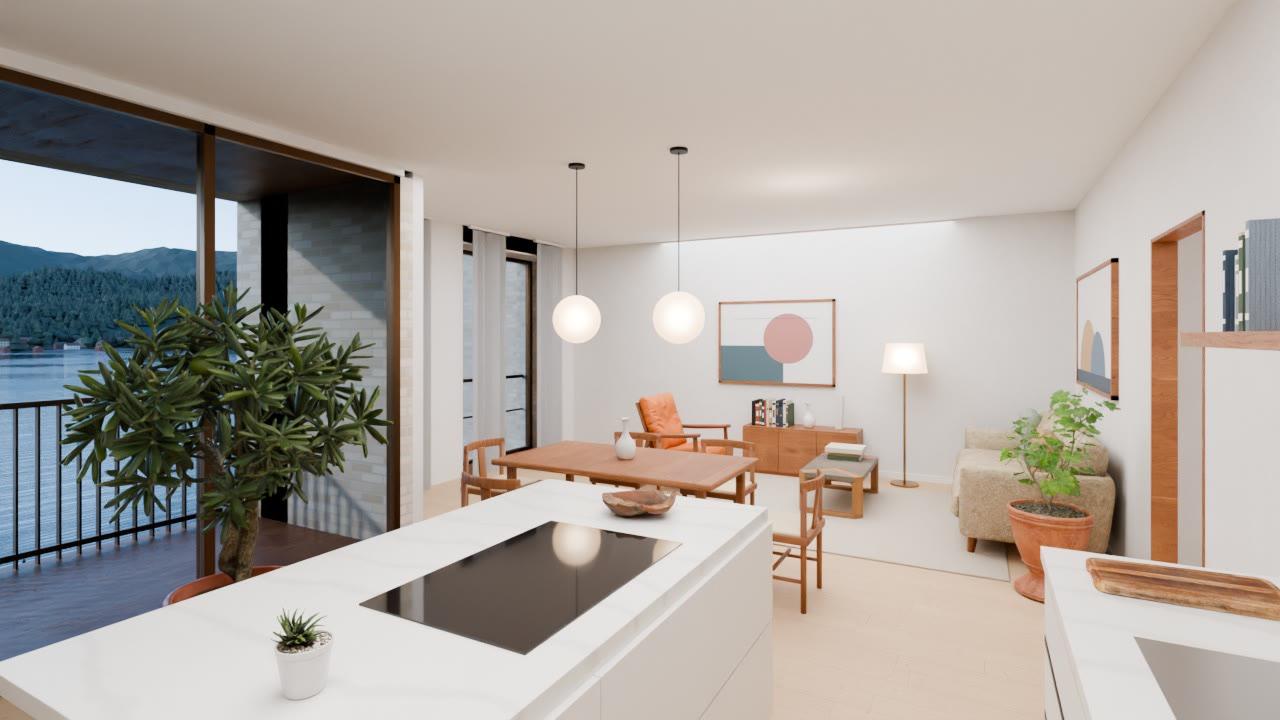
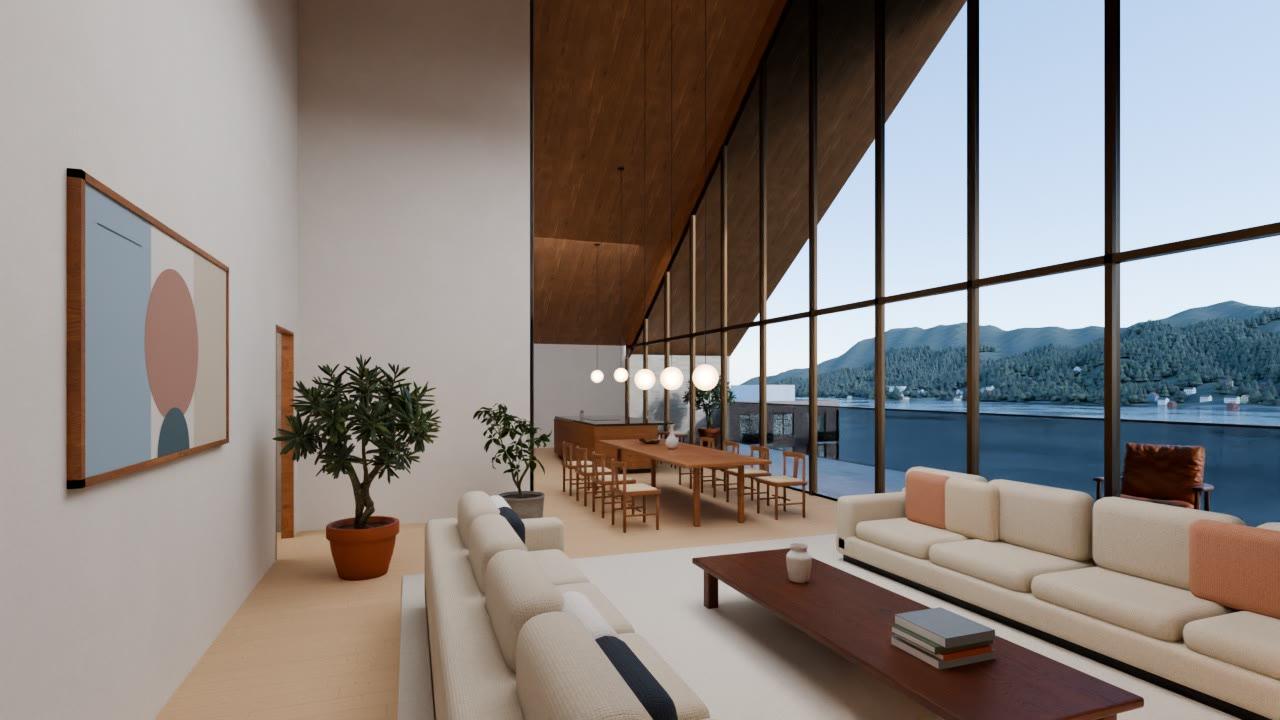
Lauvtrappen: a housing project that does not exist.
An imagined project with 40 flats by the water, made to show how new homes can be sold. The whole block is modelled and lit in Blender: the building, the neighbourhood, the trees, the people, the cars and the interiors.
On the page you scroll through the construction, from empty plot to finished building, and every flat can be opened and explored. The project is in progress.
04 · Fig. 3 · In a real product
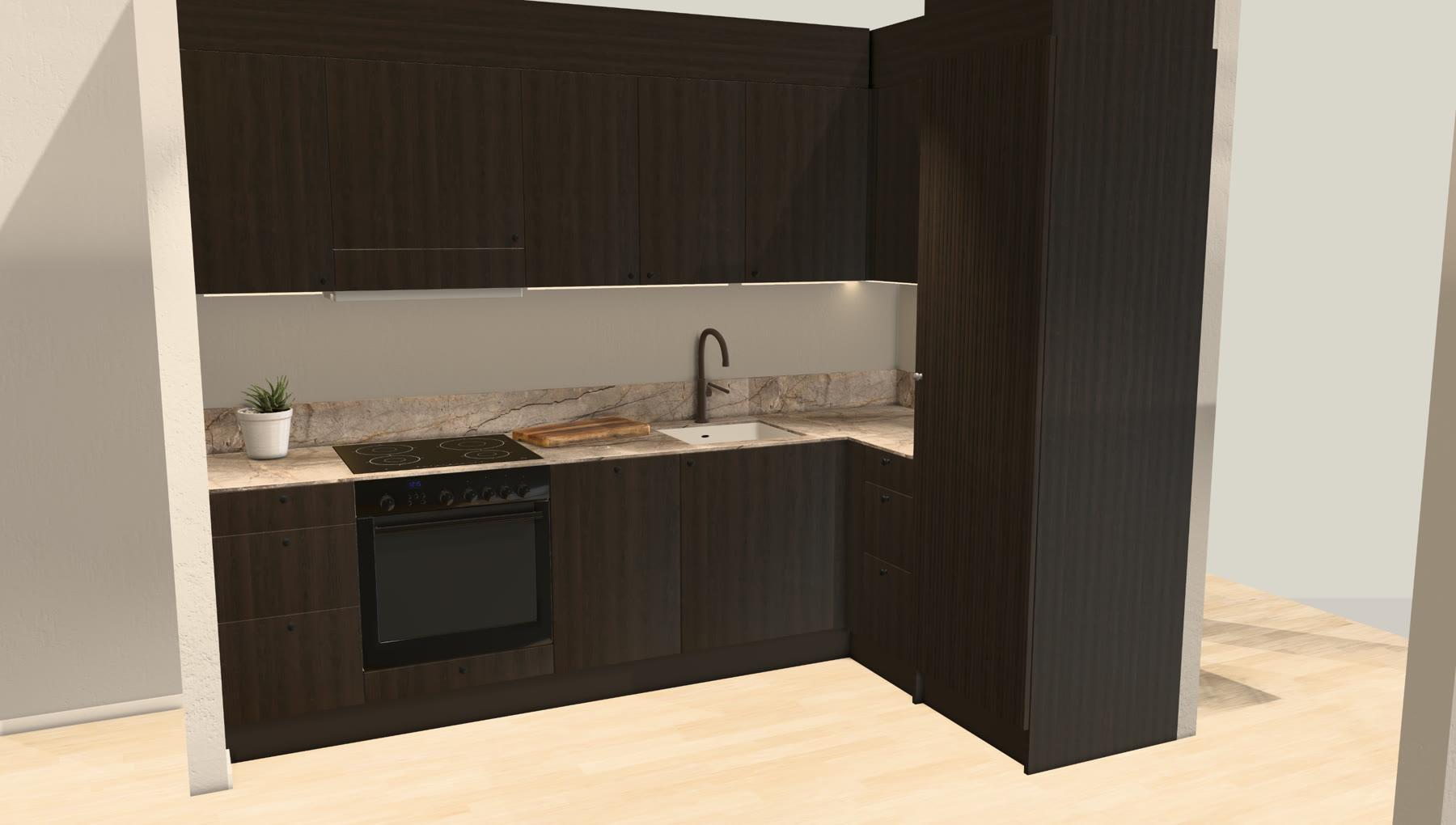
Proppy: a kitchen you can order.
In Proppy I have built a 3D kitchen planner. The customer answers a few questions and gets the kitchen drawn in their own room, with layout proposals and the option to change range, colour and handles.
Everything is put together from real Epoq modules, and the planner follows Epoq's own rules. What is shown can therefore be ordered and installed. It says so when a choice cannot be made.
The same platform turns a phone scan into a measured 3D model of the home, and paints a new renovation into a photo of the room without touching walls, windows or light.
05 · In depth · The whole chain
From an empty scene to something that runs smoothly on a phone.
Most people can do one of the links. I do all of them, and the handovers between them are usually where 3D for the web turns heavy or ugly.
- 01
Modelling
Rooms, furniture, buildings and characters are built in Blender or in code. Ready-made models are cleaned up and simplified to what the device can handle, without losing their shape.
- 02
Characters and animation
Characters are rigged with a skeleton and given movements that can be driven from code: walk, sit, fetch, wave. Hair and tails get simple physics.
- 03
Light
Light is calculated in advance and stored in images where possible. The scene looks soft and real, and the phone does not have to compute shadows.
- 04
Shaders
Custom materials and effects written for the graphics card: light layers that blend, a style that sweeps across the kitchen, a scanning light that runs over the room.
- 05
Optimisation
Models and textures are compressed, the scene is drawn only when something happens, and resolution and effects adapt to the device. On the front page the models went from 4.8 to 1.7 MB.
- 06
Photorealistic rendering
When the image should look like a photograph, it is rendered in Blender with real materials, light and surroundings, as stills or as a sequence.
- 07
Game engines
For games and worlds too large for the browser, I use Unity, Unreal Engine 5 and UEFN. I studied game development and have made games since.
Common questions about 3D.
Do people need to download anything to see 3D?
No. What I make for the web opens from an ordinary link and runs in the browser, also on mobile.
What do you need from us to get started?
What you have: drawings, photos, a product catalogue or just a description. If finished 3D models exist, I use them. If they do not, I make them.
When should we choose real-time 3D, and when images?
Real time when people should explore or put something together themselves. Rendered images when the quality of each image matters most, for example when selling homes. Often both are used, from the same model.
Can a phone measure a room?
Yes. Newer phones have a depth sensor that can map the room. The scan can become a floor plan and a 3D model with measurements.
What should people see first?
Tell me what you sell and what people find hard to picture. I reply within a day.